Red Tractor Embroidery: A Designer’s Review
When I first pulled up the Red Tractor Embroidery file on my screen, I wasn’t looking for flashy graphics or overly complex shading. As a designer who spends half my life troubleshooting thread breaks and the other half convincing clients that less is often more, I look for clarity. I look for designs that translate well from digital pixels to physical thread. This particular design caught my eye because it promised versatility within the Farm category, a niche that can easily tip into cliché if not handled with care. After digitizing several test runs and stitching out samples on various fabrics, I have formed a clear opinion on where this asset fits in a professional workflow.
First Impressions and Visual Personality
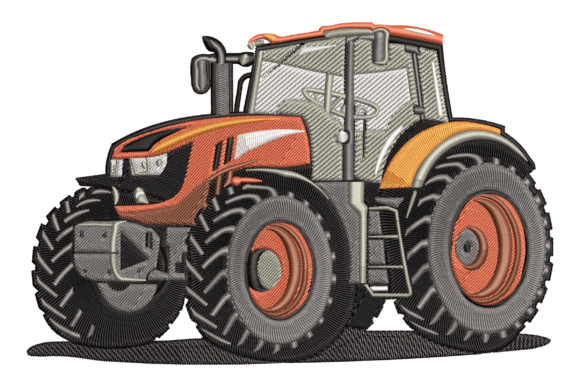
The immediate mood of the Red Tractor Embroidery is nostalgic yet clean. It avoids the cluttered look that plagues many rural-themed motifs. The layout is balanced, with a strong silhouette that reads well even from a distance. For an embroidery designer, this is crucial. If a customer glances at a sweatshirt across a room, they need to identify the subject instantly. The precision mentioned in the product description holds up; the lines are crisp, suggesting a thoughtful approach to stitch direction and density.
This isn’t just a cute icon; it feels like a branded element. The visual personality is sturdy and reliable, much like the machinery it depicts. This makes it an excellent candidate for projects that require a sense of durability and tradition. Whether you are creating a handmade product for a local craft fair or a custom apparel line for a boutique, the design carries enough weight to stand alone without needing excessive embellishment.
Real-World Application: The Tote Bag Test
To truly evaluate a machine embroidery design, you have to take it off the screen and put it on fabric. I recently used this design for a custom order involving canvas tote bags. The client wanted a set of reusable grocery bags with a rustic, homestead aesthetic. I chose a natural, unbleached cotton canvas as the base. Here, the red of the tractor popped beautifully against the neutral background.
The stitching process was smooth. Because the design is described as being created for smooth stitching, I experienced minimal thread tension issues. However, the success relied heavily on proper stabilization. For a textured fabric like canvas, a cut-away stabilizer provided the necessary support to keep the fill stitches from sinking into the weave. The result was a tote bag design that looked professional and held up to the rigors of daily use. This real-life scenario confirmed that the design is robust enough for items that will be washed and used frequently.
Versatility Across Product Lines
Beyond tote bags, I see significant potential for this design in other areas. For sweatshirt embroidery, the bold shapes translate well to thicker fabrics like fleece or French terry. The design does not get lost in the pile of the fabric, which is a common pitfall for detailed illustrations. Similarly, for baby embroidery projects, such as onesies or burp cloths, the simple color palette allows for soft, pastel thread variations while maintaining the recognizable shape of the tractor.
If you are an Etsy seller or run a small shop, this digital embroidery file can serve as a cornerstone for seasonal collections. It works exceptionally well for holiday embroidery gifts, particularly around harvest festivals or Father’s Day. The adaptability means you can create a cohesive line of design assets that includes aprons, kitchen towels, and even embroidered patch applications for denim jackets. Each application requires slight adjustments in scale, but the core integrity of the image remains intact.
Technical Considerations and Limitations
While the design is versatile, it is not without its constraints. Designers must be mindful of hoop size limitations. If you are working with a small 4x4 hoop, you may need to resize the design significantly, which could compromise the finer details. Always check the minimum recommended size before committing to a project. Additionally, when working on stretchy fabrics like jersey knits, the density of the fill stitches can cause puckering if not properly stabilized. I recommend using a tear-away stabilizer for lighter knits and testing on scrap fabric first.
Another critical factor is thread color contrast. On dark fabrics, the standard red might not stand out unless you use a bright, vibrant shade or add a white underlay. Conversely, on very light fabrics, ensure your red thread has enough saturation to avoid looking washed out. I always advise running a black-and-white mockup to check the value contrast before stitching. This helps identify any areas where the stitch density might be too high or too low for the chosen material.
Commercial Viability and Brand Trust
For those engaged in commercial embroidery, the professionalism of the finished product directly impacts customer trust. A clean, well-stitched design signals quality. The Red Tractor Embroidery contributes to this perception by offering a polished look that doesn’t appear amateurish. When customers receive a personalized gift or a small shop product that looks meticulously crafted, they are more likely to return and recommend your business.
However, before selling finished items, it is imperative to confirm the licensing terms. While the product description mentions compatibility with multiple embroidery machines, it does not explicitly detail commercial rights. Always verify whether the license allows for the sale of physical goods or if it is restricted to personal use. This due diligence protects your craft business from legal issues and ensures ethical practice.
Final Verdict for Designers
In summary, the Red Tractor Embroidery is a solid addition to any designer’s library. It balances aesthetic appeal with technical practicality. It is not just a decorative element; it is a functional tool for creating marketable goods. Whether you are digitizing your own variations or using it as-is, the design offers a reliable foundation for various embroidery project types.
Remember to test on scrap fabric, adjust your stabilizer choice based on fabric texture, and consider the end-use of the product. By treating this embroidery file with the same rigor you would apply to any high-end applique design or complex satin stitch work, you will maximize its potential. The result is a finished product that resonates with buyers and stands the test of time, both in durability and style.