Little Farmer Embroidery Design Review for Merch
As an embroidery designer who has spent years digitizing and reviewing files for commercial use, I approach every new machine embroidery design with a critical eye. It is not just about whether the artwork looks cute on a screen; it is about how that digital asset translates into a tangible, durable, and profitable finished product. Today, I am reviewing the Little Farmer Embroidery Design, a charming piece categorized under Farm Animals that promises a sweet, farm-themed character with a playful aesthetic. For small business owners, this review focuses on viability for branded merchandise rather than just hobbyist decoration.
First Impressions and Visual Personality
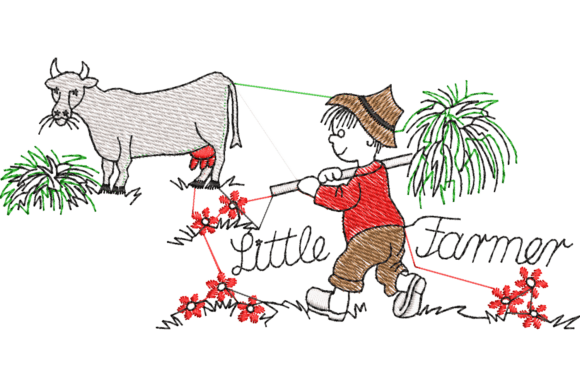
The initial appeal of the Little Farmer Embroidery Design lies in its approachable nature. The description highlights a "cute cartoon style" with a friendly look, which immediately signals its primary strength: emotional connection. In the world of small business merch, designs that evoke warmth and nostalgia tend to perform well, especially in sectors like boutique children’s clothing, local bakeries, or family-owned farms. The visual personality here is distinctly rustic yet polished. It does not feel overly modern or stark; instead, it carries a handmade charm that aligns perfectly with brands aiming for an authentic, community-focused image.
However, from a technical standpoint, "cartoon style" can sometimes imply heavy satin fills or complex color transitions. A professional reviewer must ask: does this simplicity translate to clean stitching, or will it result in puckering? The playful look suggests bold outlines and distinct shapes, which are generally favorable for durability, but we must consider the execution in actual Embroidery production.
Strategic Applications for Small Business Branding
Where does this design fit in a commercial catalog? The versatility of the Little Farmer Embroidery Design makes it a strong candidate for various custom apparel and accessory projects. Here is how I envision it performing in real-world scenarios:
- Branded Patches: This is perhaps the strongest use case. An embroidered patch allows for pre-production quality control. You can stitch these in batches and apply them to tote bags, hats, or jackets as needed. The farm theme works exceptionally well for agritourism businesses, pet brands, or organic food markets.
- Staff Uniforms and Aprons: For a café or a flower shop, placing this design on the chest pocket of an apron embroidery project adds a touch of whimsy without being unprofessional. It humanizes the staff and reinforces the brand’s friendly ethos.
- Cap Embroidery: A smaller version of this design could work on the front panel of a baseball cap. However, due to the curved surface, the design must be simplified to avoid distortion. It serves as a great conversation starter for customers wearing your brand.
- Tote Bag Design: Canvas bags are a staple for retail giveaways. The rustic feel of the Little Farmer complements natural cotton textures, making it an ideal tote bag design for eco-conscious brands.
Technical Considerations and Production Risks
While the aesthetic is promising, any experienced digitizer knows that charm does not equal stitchability. When integrating the Little Farmer Embroidery Design into your workflow, you must address several technical constraints to ensure a premium handmade product.
First, consider stitch density. Cartoon styles often rely on solid fills to create bold colors. If the density is too high, the fabric may pucker, especially on lightweight materials like children’s clothing. Conversely, if the density is too low, the backing fabric might show through, ruining the professional look. Always request a test stitch-out on the exact fabric you intend to use.
Second, evaluate the thread colors. The description mentions a "sweet" look, which usually implies pastels or earth tones. Ensure there is sufficient contrast between the character and the background fabric. If you are stitching on dark uniforms, you may need to add a white underlay or choose a version of the design with thicker outlines to maintain visibility.
Third, be cautious with size. If you plan to use this as a small chest logo or on a hat, verify that the details do not merge together. Tiny lettering or intricate facial features can become a blob of thread if scaled down too far. Always check the minimum recommended hoop size provided with the digital embroidery file.
Impact on Brand Identity and Customer Trust
Consistency is key to building brand identity. Using a cohesive design language across all touchpoints—from your website to your physical products—builds trust. The Little Farmer Embroidery Design can serve as a visual anchor for businesses in the agricultural, educational, or artisanal sectors. It signals that the brand values tradition, care, and friendliness.
When customers see high-quality commercial embroidery on their purchases, it elevates the perceived value of the item. A well-executed patch on a tote bag feels more durable and valuable than a printed graphic. This perception directly influences buyer engagement and repeat purchases. Furthermore, using such distinctive design assets helps your products stand out in crowded marketplaces like Etsy, where visual uniqueness drives clicks.
Practical Designer Notes for Implementation
Before you commit to a large production run, follow these practical steps to mitigate risk and ensure quality:
- Test in Black and White: Print or stitch the design in monochrome first. This reveals the structural integrity of the digitizing without the distraction of color. If it looks messy in black and white, it will look messy in color.
- Check Stabilizer Compatibility: Different fabrics require different support. Use a cut-away stabilizer for stretchy knits and a tear-away for stable wovens. The wrong stabilizer can ruin even the best embroidery file.
- Create a Printable Mockup: Before stitching, place the design digitally on photos of your actual products. This helps clients visualize the final result and approves the placement, saving time on physical samples.
- Verify Licensing: Crucially, confirm the commercial license terms. Not all digital embroidery file purchases allow for unlimited commercial use. Ensure you have the right to sell items featuring the Little Farmer Embroidery Design before listing them in your shop.
- Inspect Spacing and Jump Stitches: Look at the pathing. Efficient digitizing minimizes jump stitches, which reduces trim time and potential loose threads on the finished product.
In conclusion, the Little Farmer Embroidery Design offers significant potential for small businesses looking to add a touch of rustic charm to their merchandise. Its strength lies in its emotional appeal and versatility across various Farm Animals themed or general rustic branding contexts. However, success depends entirely on technical execution. By respecting the limitations of fabric texture, optimizing for the correct hoop size, and ensuring proper licensing, you can transform this cute cartoon into a powerful tool for brand recognition and revenue growth. Treat it not just as a picture, but as a functional component of your business strategy.