Review: Power to the People Embroidery Design for Merch
As an embroidery designer who has spent years digitizing files and consulting with small business owners, I approach every new machine embroidery design with a critical eye. It is not just about whether a pattern looks pretty on a screen; it is about how it performs under the needle, how it holds up after washing, and most importantly, how it elevates a brand. Recently, I evaluated the Power to the People Embroidery Design, a digital asset that promises versatility across five sizes and ten formats. For boutique owners, Etsy sellers, and apparel decorators, this review breaks down whether this file deserves a spot in your commercial library.
First Impressions and Visual Personality
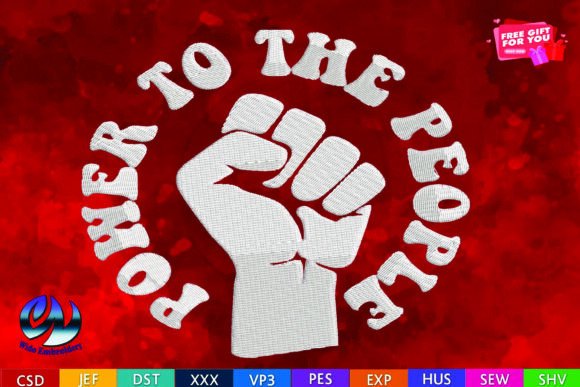
The title alone suggests a bold statement. In the world of Awareness campaigns and social commentary merchandise, typography and iconography must strike a balance between readability and impact. My initial assessment of the Power to the People Embroidery Design is that it leans heavily into a modern, assertive aesthetic. It does not feel delicate or overly ornate; rather, it projects strength and community solidarity. This visual personality is crucial for brands that want to position themselves as advocates or leaders in their local communities.
For a handmade brand or a creative studio, this design offers a "premium" yet "approachable" vibe. It avoids the clutter that often plagues complex digitized files, suggesting that the underlying stitch paths are likely optimized for clarity. When you are selling a handmade product, the perceived value is often tied to the cleanliness of the execution. A design that reads well from a distance is essential for items like tote bags or back-of-jacket logos.
Real-World Business Applications
The true test of any digital embroidery file is its adaptability. The product description notes that this design comes in five sizes and is suitable for applique, which significantly expands its utility for small business merch. Here is how I envision this design performing in various commercial contexts:
- Branded Patches: This is perhaps the strongest use case. An embroidered patch allows for inventory flexibility. You can stitch batches of the Power to the People Embroidery Design onto twill or felt backing and apply them later. This is ideal for cafes or boutiques that want to offer limited-edition gear without committing to bulk screen printing.
- Staff Uniforms and Aprons: For bakeries, florists, or coffee shops, staff apparel is a walking billboard. Placing this design on the chest pocket of a denim apron or the sleeve of a work shirt creates a cohesive team look. The applique option mentioned in the description is particularly useful here, as it reduces stitch count and keeps the fabric breathable for all-day wear.
- Tote Bag Design: Canvas totes are a staple for eco-conscious brands. The bold nature of this design ensures it stands out against the textured weave of canvas. It transforms a simple bag into a statement piece, increasing the perceived value of the item.
- Cap Embroidery: While caps require careful scaling, the availability of five sizes suggests that there is a version small enough for the front panel of a baseball cap. This is a high-margin item for any custom apparel business.
Technical Considerations and Placement Strategy
While the design is versatile, experienced embroiderers know that placement dictates success. You must consider stitch density and fabric interaction. If you are using the larger sizes for a quilt block or a back-panel jacket design, ensure your stabilizer is robust enough to handle the weight. For smaller applications, such as a left-chest logo on a polo shirt, verify that the details do not become muddy.
One area where caution is required is with curved surfaces. Cap embroidery demands precise hooping and often benefits from designs that have fewer long, continuous runs that might cause puckering. Before running a full production batch of custom apparel, always stitch out a test sample on the actual garment material. Textured fabrics like fleece or terry cloth can swallow fine details, so if the design includes thin lines, consider using a cut-away stabilizer to provide extra support.
Additionally, the mention of "applique" in the product description is a key technical advantage. Applique reduces the number of stitches by replacing thread coverage with fabric. This is excellent for dark uniforms where high contrast is needed, or for large areas where solid satin stitches might become too stiff. However, it requires an extra step in the production process—cutting and placing the fabric—which should be factored into your labor costs.
Impact on Brand Identity and Customer Trust
Your brand identity is more than just a logo; it is the sum of every touchpoint a customer has with your business. Using a high-quality embroidery file like the Power to the People Embroidery Design signals professionalism. Sloppy stitching or poorly scaled designs can undermine customer trust, making a business appear amateurish. Conversely, crisp, well-executed embroidery enhances the perceived quality of the finished product.
For Etsy sellers and craft businesses, consistency is key. If you use this design across multiple design assets—such as patches, tags, and packaging accents—it creates a recognizable visual language. Customers begin to associate that specific look with your quality standards. This visual consistency drives buyer engagement and can justify a higher price point for your goods.
Practical Designer Notes for Production
Before you integrate this design into your workflow, follow these practical steps to ensure a smooth production run:
- Test in Black and White First: Remove color distraction to check the structural integrity of the design. Ensure there are no traveling stitches or unnecessary jumps that could cause thread breaks.
- Check Hoop Size Compatibility: The description mentions five sizes, but you must confirm they fit your specific machine’s hoop capabilities. Do not assume a size will fit without measuring.
- Evaluate Thread Color Contrast: If using on dark uniforms, ensure the thread colors pop. If using applique, choose a fabric color that contrasts sharply with the background garment.
- Create a Printable Mockup: Before stitching, use a printable mockup to show clients or stakeholders how the design will look on the final item. This manages expectations and reduces revision requests.
- Verify Commercial Licensing: The description states "You MUST have an emb," which likely cuts off a sentence regarding licensing or software requirements. Always read the full license agreement included in the instant download. Confirm that you have the rights to use the design for commercial embroidery projects, especially if you are selling the finished goods.
Final Verdict
The Power to the People Embroidery Design appears to be a robust addition to any serious embroiderer’s toolkit. Its strength lies in its adaptability—from small patches to large quilt blocks—and its relevance to current cultural conversations. For small business owners looking to create meaningful small business merch, this design offers a blend of aesthetic appeal and technical flexibility. However, success depends on proper testing, appropriate stabilizer selection, and adherence to licensing terms. By treating this digital asset with the same care as physical materials, you can produce high-value items that resonate with your audience and strengthen your brand presence.